Funerals run on a strange rule: the person everyone came to hear from is the only one with nothing on the program. Every story told that day is secondhand. Every "he would have loved this" is a guess. It does not have to work that way. With ten minutes and a microphone, you can be on the program: a short message in your own voice, played on a day you will not attend but can still shape.
This guide is about leaving a last message: what to say in two minutes, how to strike a tone between tears and laughter, and the two practical questions nobody ranks an answer for: who plays it, and how do they get it? (If what you want is to write a full tribute or speech, that craft lives in our guide to writing and recording a eulogy. This is the shorter, more personal cousin.)
Why More People Are Choosing to Have the Last Word
Something shifts when the voice in the room belongs to the person being remembered. For two minutes the service stops being about absence and becomes a last moment of presence: shoulders drop, people smile through tears, and the stories that follow get warmer and truer. A message in your voice does what no reading of your words by someone else can do: it brings the room your timing, your accent, the pause before the joke. People do not gather to remember a font. They gather to remember a voice.
That is the quiet philosophy behind Goodbye App: a farewell does not have to be only mourning. Done right, a last message can put warmth, laughter, even mischief into a room that badly needs it, emotions a funeral almost never gets to feel.
The Recording That Made the World Laugh and Cry
In 2019, mourners at a Dublin cemetery were standing in silence as Shay Bradley, an Irish Defence Forces veteran, was lowered into the ground. Then, from a speaker, came knocking. And then Shay's voice, shouting to be let out, complaining loudly about the dark, and finally breaking into song. He had recorded it before he died and asked his family to play it at the graveside. The clip traveled around the world within days, and the phrase his family used afterward explains why: it was him, being completely himself, one last time. His daughter said he wanted his grandchildren's last memory of him to be a laugh.
You do not need a prank. What made that recording matter was not the joke; it was that the goodbye happened in his voice, on his terms, with his exact sense of humor. That part is available to everyone.
What to Say in Two Minutes (You Do Not Need a Speech)
A last message is not a eulogy, an autobiography, or a lecture. Two minutes, four beats:
- Arrive. "If you are hearing this, I finally found a captive audience." Or simply: "Hello, everyone. It is me." The room needs one breath to adjust to your voice; give it a light first line.
- Thank. Name the people, name the thing: "Maria, thank you for thirty years of pretending my driving was fine." Specific beats sweeping.
- Give. One true sentence you want the room to keep. What you learned, what you loved, what you want them to do with a Sunday now and then.
- Release. Tell them to eat, to laugh, to look after each other, to go home before the parking runs out. Your permission to be okay is the most valuable thing in the recording.
Write it out first if that helps, but do not read it like an announcement. Talk it. One take, maybe two. The stumble where you laugh at your own line is not a flaw; it is the point.
Put together, a whole last message can be this small:
Hello, everyone. It is me. Yes, I can see you. Relax, I chose the audio-only package. Thank you for coming, and thank you for every ordinary Tuesday. Franco, the garage key is taped under the workbench; you would have found it by June. Look after each other, eat the good dessert first, and go home before the parking runs out. That is an order from management.
Getting the Tone Right: Comfort, Gratitude, Even Humor
The best last messages hold two tones at once: they are allowed to be funny because they are unmistakably loving. A useful test for every line: would it land as warm if the room were crying? Shay Bradley's knocking works because underneath the gag is an obvious message: I am still me, do not be so sad. Aim there. Tease the people who can take it, thank the ones who need it, and never use the platform to settle anything. A last message with a barb in it is remembered for the barb.
If humor is not your register, do not force it. Steady warmth, a favorite line of poetry, a blessing in your own words: the room does not need you to perform. It needs you to sound like you.
I did not get everything I wanted in this life. I got all of you instead, which turned out to be the bigger order. Cry if you need to, but you have to laugh at least once before the coffee. Pick the story. You know the one.
The Practical Problem Nobody Solves: Who Plays It, and When
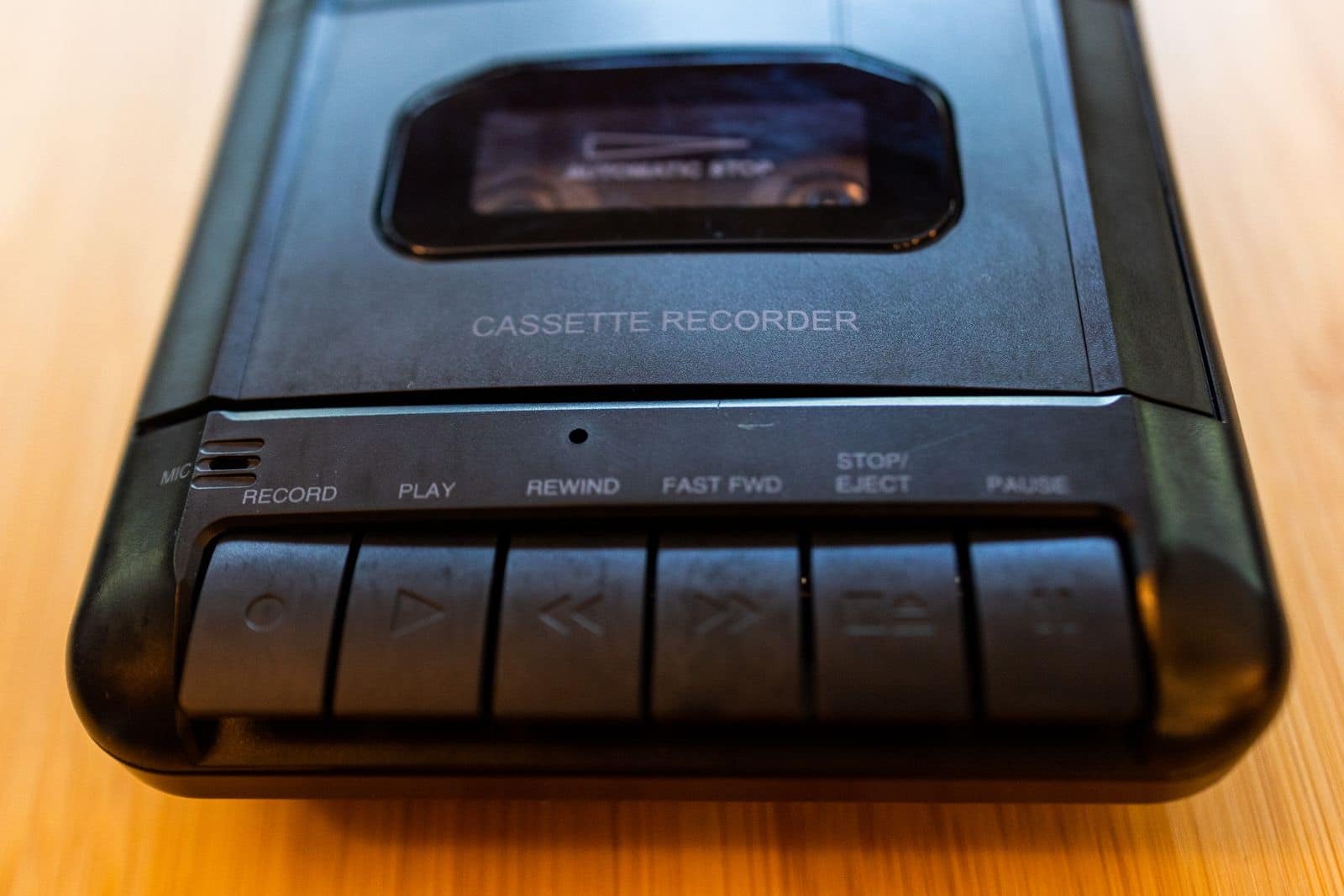
Here is where most plans quietly die. A recording on your phone is locked behind your passcode. A file on your laptop is a needle in a digital haystack nobody wants to search that week. And a recording nobody knows exists will play for no one. A last message needs a custodian: one named person who knows the recording exists, receives it reliably, and agrees to play it at the right moment.
Choose that person deliberately. Someone steady, someone who will be at the service, someone who can operate a speaker while emotional, which rules out more people than you would think. Tell them the cue: at the graveside, at the reception, or quietly with the family the night before. The moment matters as much as the message: a room mid-grief hears differently than a dinner table full of stories.
How Scheduled, Private Delivery Works
On Goodbye App, you record your message in your own voice, in the app, for free. It stays completely private until the moment you set. You choose your custodian as the recipient, and the release: after you are gone, or any date you pick, up to 30 years ahead. When it releases, they get it by email, clearly from you, with nothing to dig for and no passcode standing in the way. Until then you can re-record it as many times as your material improves.
One honest note: the app delivers the recording to your person; the graveside speaker remains their department. Pick someone with charged batteries.
One Message or Many: Moments Beyond the Funeral
Once people record one message, most realize the funeral was only the first date on a longer calendar. A message for the first birthday you miss. One for a wedding years away. One for the friend who will take it hardest, timed for a month after the service, when the casseroles stop and the checking-in thins out. On Goodbye App each message is its own scheduled delivery, so your voice can arrive not just once, but at the moments that will need it most. Our guide to leaving letters for loved ones maps out that longer calendar.
If the everyday recordings are the ones you actually want, the practical side of making them, what to say and how to get a phone to capture your voice properly, is covered in recording your voice for your family.
Record Yours Today, Free
You already know your four beats: arrive, thank, give, release. The recording will take less time than you spent choosing what to watch last night, and unlike almost everything else you will do this week, it will matter in thirty years. Sign up free, press record, and say the thing. If a Dublin grandfather can get a graveyard laughing, you can get a room feeling exactly what you want it to feel: that you were there, one more time, and that you left smiling.
Every person has a legacy®
Begin