There are things you want to tell your children that they are not old enough to hear yet. What you were like before they existed. What their grandmother said the day they were born. What to do with heartbreak, with money, with a Tuesday that goes wrong. So parents write milestone letters: words sealed today, addressed to the person their child will be at eighteen, at graduation, on a wedding morning, on the first day of being someone's parent themselves.
Some parents write them because life has handed them a deadline and they intend to outwrite it. Most write them for a better reason: because the person your child needs at twenty-five is you at your current age, and memory is a terrible courier. This guide covers which moments to choose, what to say in each letter, how to write for a child too young to remember you, and the part every other guide skips: how a letter written tonight actually finds its way to an adult decades from now.
Why Parents Write Milestone Letters
A milestone letter does something being present cannot: it catches the exact person you are right now, this year's voice, this year's love, and saves it for the moment it will matter most. Even if you are at every graduation and wedding, the parent who wrote the letter years earlier is a different gift from the one standing in the room. You at thirty-five, talking to your daughter at eighteen, is a conversation that can only happen on paper.
And if you might not be there, because of illness, risk, or simply the mathematics of loving someone forty years younger than you, the letters become something else entirely: proof that you thought ahead to their biggest days and chose to stand in them anyway.
Choosing the Moments: Big Days, Hard Days, Ordinary Days
The classic milestones choose themselves:
- The 18th birthday, the passage into adulthood.
- Graduation day, when a chapter closes on schedule.
- The wedding morning, before the noise starts.
- The birth of their first child.
- The day they move into their first home.
The letters people treasure most, though, are often the unexpected ones. A letter for the first real heartbreak. A letter for a hard year, addressed simply to whenever it comes. A letter for an ordinary Tuesday at thirty, saying nothing except that you loved them on an ordinary Tuesday at their age too. Mix the two kinds. The big days give the collection its spine; the small ones give it its soul.
What to Say in Each Letter, With Example Lines
One rule carries every milestone letter: write from a memory, not from a podium. Advice ages unpredictably; the way you saw them never does. A few openers that work:
You are seven as I write this, and this morning you fired me from breakfast duty, citing creative differences. I want to tell you about the day I knew exactly who you were.
Eighteen. I have been writing this letter in my head since the nurse handed you to me and I forgot how to breathe.
If today is hard, I want to lend you something: the absolute certainty I felt about you on the day I wrote this.
I watched you lose the final on Saturday and then shake every hand on that field. Winning would have told me nothing. You told me everything.
In each letter, aim for three ingredients: one specific memory told fully, one true thing about them you have observed and they may not know, and one thing you hope for them at exactly the age they will be when they read it. Skip the generic wisdom. They will have the internet for that. They will only ever have one source for how it felt to be their parent.
Wedding Day and Graduation Letters

The wedding letter is the one most parents want to get right, and the trick is to write it about them, not about marriage. Tell them what you noticed about how they love people: how they guarded their friends at school, what they were like when they first brought someone home. End with a blessing, not a manual. One good sentence of advice lands harder than a page; pick the one thing you know to be true and give it plainly.
Marry the person who looks for you in every room. You looked for me across the breakfast table this morning, twenty-odd years before your wedding day. It is the best feeling in the world, and I am glad you found it twice.
Graduation letters carry a different job: they arrive at the exact moment your child is being measured, and their work is to say that the measuring never mattered to you. Recall the first day of school, the year that almost broke them, the teacher who saw them. Then point forward: not "follow your dreams," but what you genuinely see in them and where you would bet it takes them.
Writing to a Child Too Young to Remember You
This is the letter nobody wants to need, and the one that matters most when it is needed. If your child may grow up without their own memories of you, your letters become their memories, so write accordingly. Describe yourself the way a friend would: what you laughed at, what you were bad at, the sound of your Saturdays. Tell them how you loved them in physical detail, the weight of them asleep on your chest, because they will not remember and nobody else will think to say it.
Answer the questions they will one day be too shy to ask someone else: Was I like you? Were you proud of me? Did you know me at all? You did. Prove it with specifics.
If a diagnosis has made time short, there is an order of work for limited energy in letters after a terminal diagnosis.
Letters They Can Hear: Recording Your Voice
A child who was three when they lost a parent does not remember the voice. Ask anyone in that position what they would trade for a recording. On Goodbye App you can record a letter in your own voice, or attach a recording to the written one, so an eighteenth-birthday letter arrives with the sound of you saying it. Read the letter aloud once, plainly, like you are talking across the kitchen table. Do not perform. The crack in your voice at the good part is the part they will play twice.
How Long Should Each Letter Be?
Shorter than you fear. A milestone letter is not a biography; it is a hand on the shoulder at a specific moment. Two hundred to five hundred words each is the sweet spot, with one exception: the letter for a child who will not remember you can run as long as you need, because for them, detail is the whole point. If one letter grows past a thousand words, it is probably two letters for two different milestones wearing one envelope.
The Shoebox Problem: Making Sure They Actually Arrive
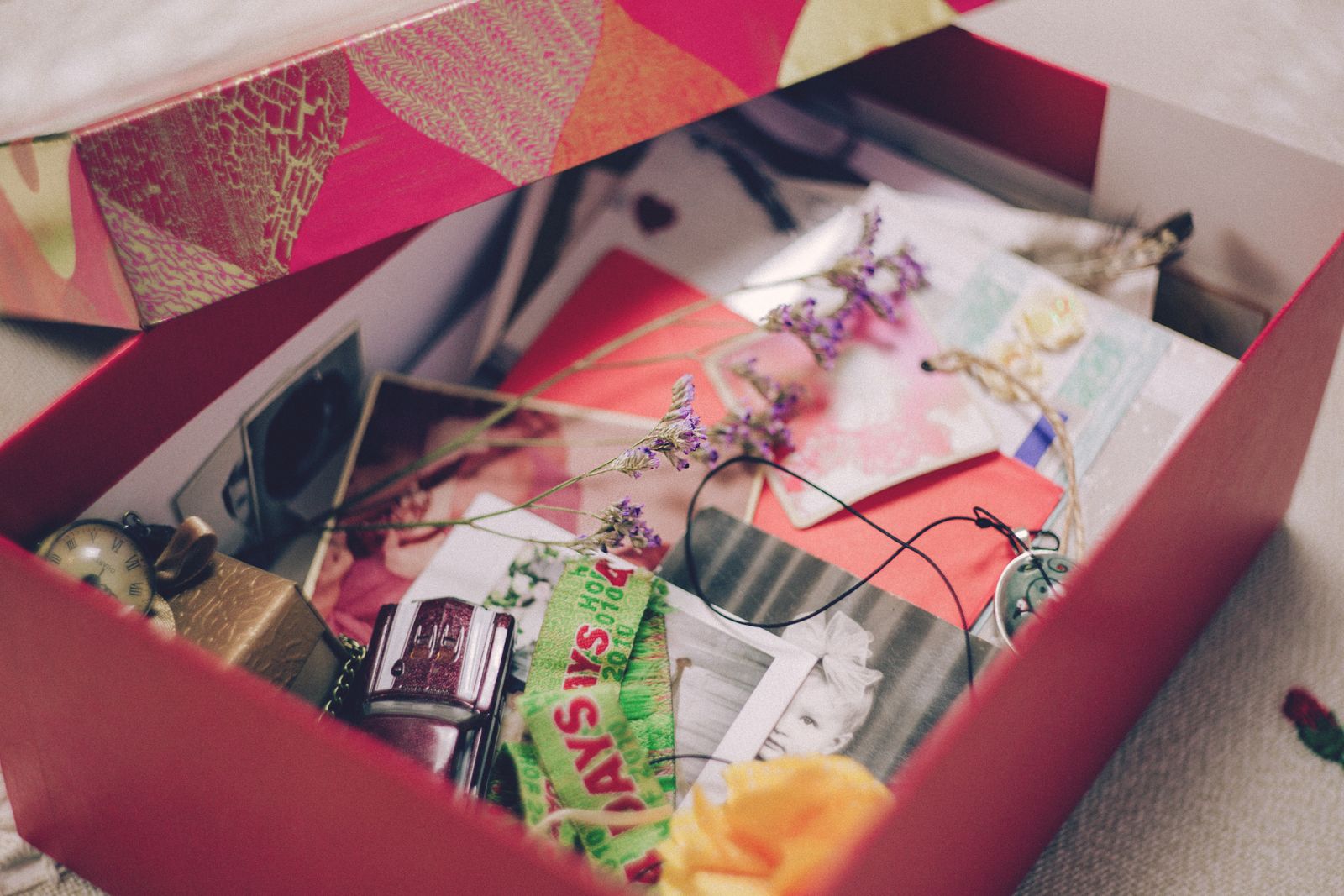
Here is the uncomfortable question hiding under every milestone letter: who delivers it? A shoebox of sealed envelopes assumes someone will still know where it is in fifteen years, remember which envelope matches which milestone, and resist reading them early. Houses get sold. Executors deliver once, not across twenty years of birthdays and weddings. The letters that survive all of that still have to survive being handed over at the wrong moment, in the wrong order, by someone doing their best with a box of unlabeled love.
This is the problem scheduling solves outright. On Goodbye App you write each letter, choose the recipient, and set its own release date, up to 30 years ahead: one for the 18th birthday, one for the wedding season of life, one for any date you choose. Each stays completely private until its day, then arrives by email, announced and on time, whether the shoebox survived the house moves or not. It is free, and you can keep editing any unreleased letter as your child grows and the story gets better.
A Gentle Way to Write the First One Tonight
Do not start with the wedding letter. Start with the smallest one: a letter to your child at eighteen about who they were this week. Set a timer for fifteen minutes. Write the breakfast negotiation, the mispronounced word you refuse to correct, the thing they did that made you leave the room so they would not see you laugh. Seal it with a date and stop.
You will not remember these details in ten years. That is the entire reason to do it tonight. Write the first letter free, schedule it for a birthday far from now, and let tonight's version of your family arrive exactly on time. For the yearly-tradition version of this idea, see our guide to letters to open at 18.
Every person has a legacy®
Begin