
In 1940, Oglethorpe University in Atlanta sealed a chamber called the Crypt of Civilization: newsreels, seed samples, a typewriter, the voices of the age, all locked behind a steel door that is not to be opened until the year 8113. It is the grandest time capsule ever made, and almost nobody you love will ever see it. The time capsules that actually change lives are small: a letter written at a kitchen table on an ordinary Tuesday, sealed for a morning twenty years away, opened by hands that were tiny when you wrote it.
This guide is about that kind of capsule: a time capsule letter written for someone else, usually a child, to be opened on a date you choose. If the person you want to write to is your own future self, that is a lovely and different project, and it has its own guide. Here you will find the moments worth sealing, what to actually write, prompts by occasion, two complete example letters, an honest guide to building a physical capsule that survives, and the delivery problem nobody warns you about.
What a Time Capsule Letter Is
A time capsule letter is a letter written today and sealed until a chosen future date: not hidden from its reader forever, just parked in time. It differs from a diary, which faces inward, and from milestone letters, which follow a person through the events of their life. A time capsule letter does something narrower and stranger: it preserves one present moment, whole, and ships it into the future. The reader does not just learn what you thought. They visit the exact afternoon you wrote it.
That is why time capsule letters obey a rule that feels backwards: the more ordinary the contents, the more valuable the delivery. Wisdom ages into something anyone could have said. But the price of milk, the song that would not leave the radio alone, what your daughter said at breakfast when she was three: those become treasure, because nothing else in the world saved them.
Moments Worth Sealing
Almost any day can be sealed, but some moments practically ask for it:
- A new baby. Write during the first sleepless year, seal for the eighteenth birthday. The person who opens it will be the age you were, give or take, when everything changed.
- The first day of school. A backpack bigger than the child wearing it. Seal it for graduation morning.
- A wedding. Couples seal letters to each other, and some ask every guest for one line, all of it opened on the tenth anniversary.
- A new home. What it cost, what was broken, which neighbor brought bread. Open it the day the mortgage ends, or the day you leave.
- A round-number year. A letter from this decade to the next one: who is at the table now, what you are worried about, what you hope has stopped mattering.
- Grandchildren. Grandparents hold decades the parents never saw. A letter from that far shore, sealed for adulthood, is often the only bridge that ever gets built.
What to Write: The Ordinary, Not the Eternal
The instinct, faced with a letter that will not be read for twenty years, is to be profound. Resist it. The future has plenty of wisdom; what it runs out of is detail. Write the ordinary day, and let time do the transfiguring. A shape that works:
- Pin the moment. The date, the place, the weather, who is in the house, what dinner will be.
- The reader, right now. If it is a child: their exact words this week, shoe size, current obsessions, what makes them laugh until they fall over.
- Your life, honestly. What you do all day, what things cost, what you are hoping for, what is hard. The reader will be an adult; write to that adult.
- One guess about the future. Guess what the world will be like, and what the reader will be like, on opening day. Wrong guesses age best of all.
- One wish. Not advice. A wish. End there.
One caution from every parent who has done this: do not promise the future anything. Write "I hope I am there" and never "I will be there." A time capsule letter should be able to land softly in any version of the years between.
Prompts by Occasion
For a new baby: what the first week was actually like; the name conversation, including the names that lost; who came to meet you and what they said; what I did the hour you were born.
For a graduation: what you wanted to be when you were five; the teacher who saw you first; what school cost me to watch some mornings; what I know about starting out that I will not say out loud today.
For a wedding anniversary: what I thought the moment I saw you today; the vow I would add in ten years; the thing we argued about this morning, preserved for the laugh.
For grandchildren: the house I grew up in, room by room; what your parent was like at your age, with evidence; the family story nobody wrote down until now; what I paid for my first car and what it was worth in joy.
For a decade capsule: everyone at the table tonight and one sentence each; the headline we are tired of; the gadget we think is amazing, dated for future comedy; what we pray is different when this opens.
Two Example Letters
Written for invented families, offered for shape rather than copying. A mother, to her daughter, sealed the week she turned one, addressed to eighteen:
Right now you are asleep down the hall with both fists closed, as if you drove a hard bargain all day and mean to keep the winnings. You are one. You say "duck" and mean every animal, and you say it maybe two hundred times a day, and I would not sell one of them. Our flat is small and the washing machine is loud and your father dances you past it to a song called one thing while dinner burns a little. I am tired in a way I did not know existed and happier than I have ever been, and some afternoons both at once, and now you know something about being a mother that I could not have told you any other way. You are eighteen this morning. I am guessing you are taller than me and that you still close your fists when you sleep. I hope I am pouring your coffee while you read this. Whatever the years did between this line and that kitchen, they started here, in a small loud flat, with you asleep and me writing instead of sleeping because I did not want to lose today. Happy birthday, duck.
A grandfather, to his grandson at nine, sealed for twenty-five:
This afternoon you helped me stake the tomatoes and you asked why I talk to them, and I told you they grow better for company, which is not in any book but is true anyway. You are nine. You want to be a marine biologist on weekdays and a striker on weekends. I am seventy-one, which will sound old to you until the day it suddenly does not. By the time you read this you will be twenty-five, which was my age when I met your grandmother at a bus stop in the rain, the single luckiest weather of my life. I will not load this letter up with advice; you will have had plenty. I will just tell you what I knew today and did not say: that you are kind before you are clever, which is the right order, and that a man who talks to tomatoes and a boy who listens are both doing fine. If you ever plant a garden, stake them early. Talk to them. Think of me.
Building a Physical Capsule That Survives
If you are making a box as well as a letter, a few unglamorous rules decide whether it survives its journey:
- Container: a rigid archival or metal box, kept indoors. Damp is the great destroyer of capsules, which is why burying one in the garden is romance the contents rarely survive. If you must bury something, bury a token and keep the real letters inside.
- Paper and ink: acid-free paper if you can, pencil or good pigment ink. Cheap ballpoint and thermal paper, like receipts, fade badly.
- Photos: print them. Do not laminate anything; lamination cannot be undone.
- No metal fittings: paper clips, staples, and rubber bands rust and rot against the pages they touch.
- No gadgets: a USB stick sealed today is a riddle in twenty years. Anyone who has found a floppy disk in a drawer knows how fast formats abandon us. Paper needs no player.
- Label the lid: the opening date, written large, so the box itself carries its instructions.
Why Capsules Go Missing
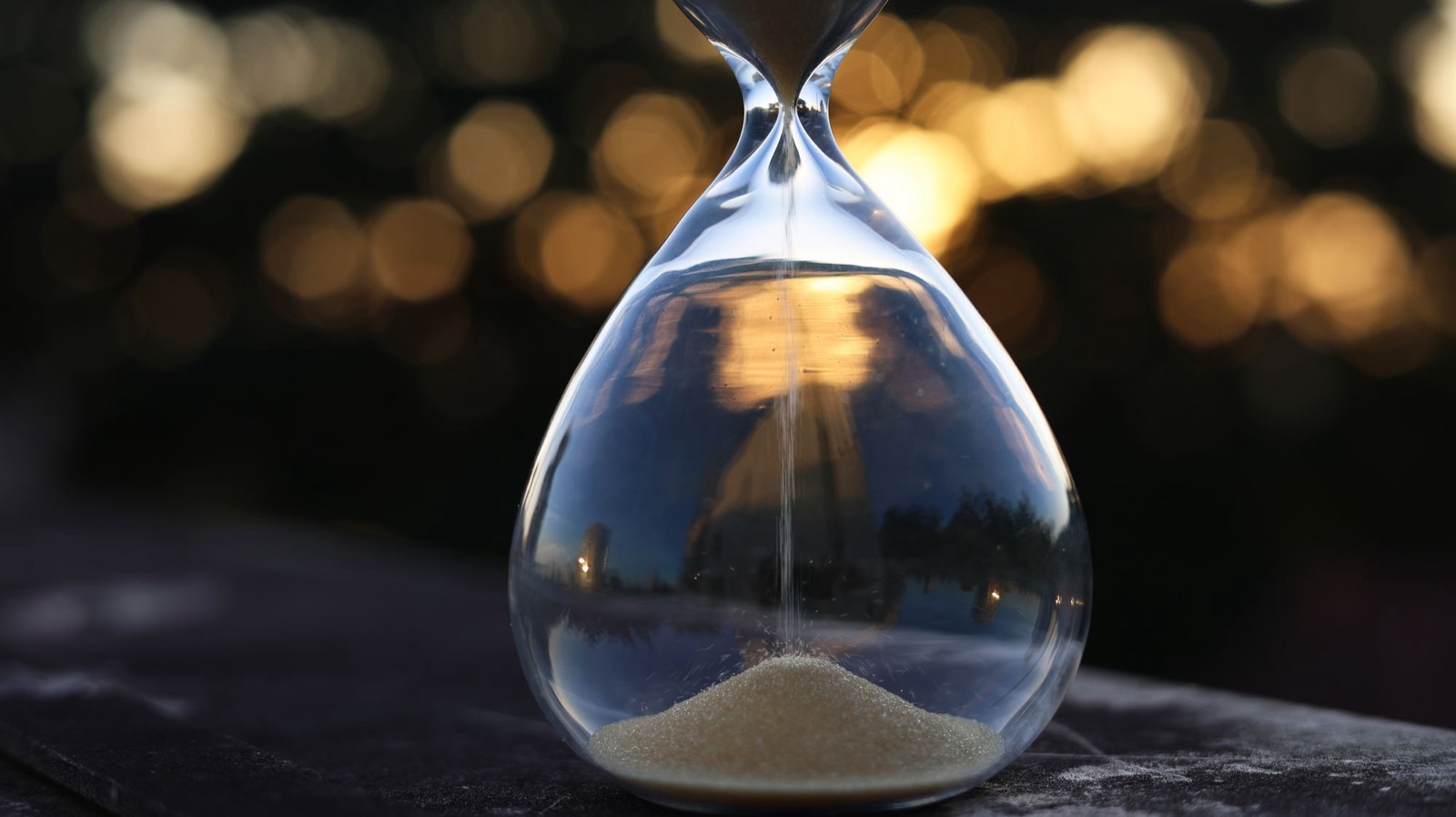
Here is the part the craft articles skip. The International Time Capsule Society, which spent years keeping a registry of capsules, has estimated that most of the world's time capsules are lost and forgotten. Not opened and disliked: never found at all.
The failures are all ordinary. The family moves, and the box rides to a storage unit and out of memory. The one person who knew where it was kept is the person the letter was meant to outlive. The opening date arrives and passes, because a date written on a lid cannot ring. Renovations find capsules a century early; forgetting finds them never. A physical capsule has a single point of failure, and it is not the box. It is human memory, the least archival material there is.
A Capsule That Cannot Be Lost
This is the problem scheduled delivery was built for. On Goodbye App you write the letter, choose the opening day, up to thirty years ahead, and it is delivered by email on that morning: no box to lose, no lid to forget, private until it is sent. You can record it in your own voice too, which seals something no paper can hold: the way you sound right now. It is free, it works on the web and Android, and it writes in 15 languages. The strongest tradition is a pair: a physical box for the objects, a scheduled letter as the messenger that cannot be misplaced. Let the letter keep the secret of where the box waits.
Opening Day
A capsule earns a small ceremony. Read it where you can take your time, alone first if the letter is from someone gone. Read it aloud on the second pass; sealed voices want air. Photograph the moment, because opening day is itself a day worth capturing. And then do the thing that turns a capsule into a correspondence: write back. Put your reply where the next reader will find it, or seal a new letter for the next interval. The best time capsules are not monuments. They are conversations with a very long pause.
Common Questions
How far ahead is too far? One generation is the sweet spot. Beyond thirty years, addresses, formats, and families drift too much for confident delivery; inside a few years, time has not done enough work. Eighteen birthdays, a silver anniversary, a decade: those are the distances letters love.
Handwritten or typed? For the paper copy, handwritten if you can: your handwriting is a photograph of you that no camera takes. Typed is better than unwritten. Many people do both, a handwritten page in the box and the full letter scheduled digitally.
What if life changes before it opens? Write to the person, not to the circumstances, and the letter survives almost anything: "I hope" instead of "you will," love instead of plans. A scheduled letter can also be updated or retired at any time before its date, which paper in a sealed box cannot.
Is a time capsule letter a substitute for the serious letters? No, and it does not try to be. It is the lightest member of a family that includes milestone letters and letters kept for after you are gone. Start with the capsule. It teaches the habit, and the habit is the hard part. One ordinary Tuesday, sealed tonight, is worth more than the perfect letter you were always going to write.
Every person has a legacy®
Begin


