
There is a Swedish word, döstädning, that translates to "death cleaning," and it describes something Swedes consider simple good manners: going through your belongings, in unhurried middle or old age, so that nobody else ever has to. Margareta Magnusson wrote the small book that carried the idea around the world, and its advice is blunt: do it sooner rather than later, before somebody else has to do it for you.
The idea keeps going viral, most recently in a wave that includes "financial death cleaning" for tidying accounts and subscriptions, because underneath the blunt name is something people recognize instantly: everyone has stood in a dead relative's packed garage, wondering where to begin, and nobody wants to become that garage. This guide explains what death cleaning is and is not, where to start, the questions that make decisions easy, and the one thing you should add to your home while you subtract everything else.
What Death Cleaning Is
Death cleaning is decluttering with a specific audience in mind: the people who will one day have to deal with your things. That single reframe changes everything about how it feels. Ordinary decluttering asks "do I need this?" Döstädning asks "should this be someone else's problem?" It is done slowly, over months or years, not in a weekend purge. It is done while you are alive and well, which is what makes it an act of care rather than a crisis. And it is, by every account of people who do it, strangely pleasant: less like cleaning and more like reading your own biography with a recycling bin nearby.
Japan arrived at a related idea from the other direction, a notebook to fill in rather than a house to empty, described in the Japanese ending note.
Not Morbid at All
The name does all the scaring, and then the practice turns out to be the least morbid thing you will do all year. Nothing about death cleaning requires you to think you are dying; you can start in your fifties or sixties, healthy, and treat it as ongoing maintenance, like gutters. The subject is not death. The subject is respect: for the people who love you, whose grief should not come with forty hours of manual labor attached, and for your own things, which deserve to be used and enjoyed by someone rather than entombed in a spare room. If anything, practitioners report the opposite of gloom: lightness, and a house that finally exhales.
Why Everyone Is Doing It Now
Three reasons, arriving together. The largest generation in history is entering its downsizing decades, and their children, living in smaller homes, have quietly stopped wanting the china. Viral culture rediscovers the book every couple of years, most recently alongside the financial variant: closing dormant accounts, canceling forgotten subscriptions, and listing assets so nothing is lost. And a broader shift has made death speakable: the same movement behind death cafes and death doulas has made tidying-for-mortality feel less like superstition and more like flossing.
Where to Start (and Where Never to Start)
Magnusson's most practical rule: start with storage, never with photographs. Basements, attics, closets, the garage. Storage is where things live precisely because nobody is emotionally attached to them, so decisions are fast and momentum builds. Clothes are a classic first category: duplicates are obvious and charities want them.
Photographs, letters, and diaries come absolutely last, after your deciding muscles are strong, because they are pure sentiment and will swallow an unprepared afternoon whole. There is even a Swedish-grandmother trick for the private things: keep them in one clearly labeled box that a trusted person is instructed to discard unread. Everyone is entitled to a box like that.
The Questions That Decide
Death cleaning runs on a handful of questions that make individual decisions almost automatic:
- Will anyone I love be happier because I saved this? The master question, adapted from the book.
- Would I buy this today? If no, its era has ended.
- Does someone I know need this right now? Then it should be theirs now, not eventually.
- Is the story about the object, or just near it? Keep stories; stories weigh nothing. A photo of the thing, plus the story written down, often outperforms the thing.
- Am I keeping this for a person who does not actually want it? Ask them. The answer is clarifying and occasionally hilarious.
Giving Things Away While Alive
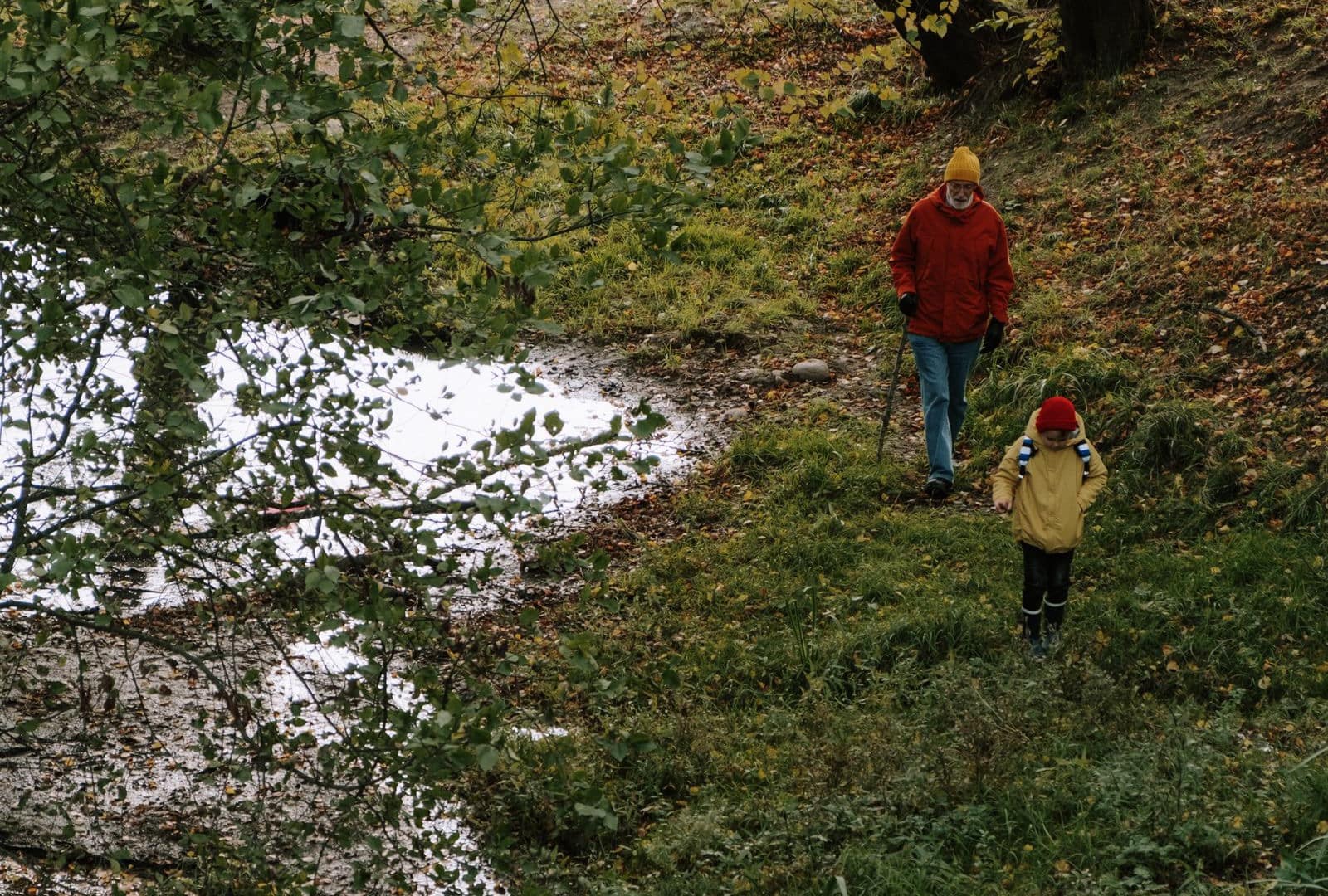
Here is the part inheritance gets exactly backwards: things given after a death arrive wrapped in grief, while the same things given in life arrive wrapped in a visit. Death cleaning moves the giving forward. The ring goes to the granddaughter on an ordinary Sunday, with the story of who wore it and when, told by the only person who knows it. You get to see her wear it. She gets to ask questions. The object arrives with its meaning attached, instead of being appraised in a probate spreadsheet.
Two cautions keep this sweet instead of complicated. Give evenhandedly enough that nobody is counting. And for anything genuinely valuable, know your jurisdiction's gift and estate rules first; generosity should not create a tax surprise.
The Digital Shelf
Your hard drives are a hoarder's attic that takes up no space, which is why they are worse: nobody is forced by a full closet to deal with them. Death cleaning the digital shelf means deleting the noise (nobody needs your 14,000 near-duplicate photos; they need the best 400, labeled), closing dormant accounts, canceling forgotten subscriptions, and writing down where the important files and passwords live so access dies with a plan instead of with you. That last part has its own complete guide: digital legacy planning, including the legacy-contact tools the big platforms already provide.
The One Thing You Add
Death cleaning is subtraction, with one glorious exception. As you sort, the stories surface: who gave this, what happened that winter, why there is a dent in the copper pot. Those stories are the actual inheritance, and they are the only thing in the house that cannot be donated, because they exist solely in you.
So as you empty shelves, fill one thing: letters. On Goodbye App you can write to the people you love, or record the stories in your own voice, which is the version a family plays twice. Each letter is delivered by email when you choose: right away, on a wedding day years off, or after you are gone, and stays private until it is sent. It is free, on the web and Android, in 15 languages. A death-cleaned house plus a set of scheduled letters is the full version of the Swedish idea: nothing left to sort, everything left to say, said.
If you want somewhere to begin, our guide to writing a legacy letter pairs naturally with a death-cleaning season: one drawer, one story, one letter at a time.
A Gentle Schedule
Döstädning is a pace, not a project. A workable rhythm:
- This week: one shelf or one drawer, storage category only. Twenty minutes.
- This month: one room's storage done; one bag donated; one thing given to its future owner in person.
- This season: the paperwork pass, including the financial version: accounts listed, subscriptions culled, the when I die file started.
- This year: photos and letters, last, with tea, and the first scheduled letter written.
At that pace it never becomes grim, and it never becomes a deadline. It is just how the house runs now.
Common Questions
Am I too young for this? The framing works at any age; what changes is the dosage. At 35 it looks like not keeping boxes you have never unpacked from the last move. At 65 it looks like the full practice.
How is it different from minimalism or KonMari? KonMari asks what sparks joy for you; minimalism optimizes your daily life. Döstädning asks what your death will cost the people you love, in labor and confusion, and works backward. Same bin bags, different beneficiary.
What about my partner's or parents' things? You can only clean your own. What you can do is start visibly and talk about how good it feels; the method spreads by envy, not by nagging. For parents, one honest sentence opens the door: "I want your stories more than your stuff."
What if throwing things away feels like erasing someone? Then you have found the exact item to photograph and write about before it goes, or the rare item that stays. Death cleaning is not about owning nothing. It is about everything you own meaning something.
The whole practice compresses into one sentence: leave your people a light house and a heavy heart, not the other way around. The house you can empty a drawer at a time. The heart you fill with words, and that part you can start tonight.
Every person has a legacy®
Begin


